‘How much?’ How Hokkien traders spoke across languages 400 years ago
How did Hokkien merchants learn foreign languages and overcome linguistic barriers while doing business in unfamiliar lands during the Ming dynasty? Taiwanese academic Fabio Yuchung Lee, leader of a National Tsing Hua University research team on Philippine Chinese Manuscripts of the Herzog August Bibliothek, shares his insights.
24 Nov 2026
Culture
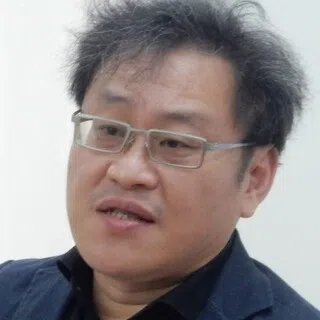

(Photographs courtesy of Fabio Yuchung Lee, unless otherwise stated.)
It is well known that Chinese merchants have long been active and successful in Southeast Asian trade. Yet how did those who ventured across the seas more than four centuries ago learn to communicate with local communities, European colonisers and fellow traders who spoke different languages? This is a question for which historical sources have left us few clues. Fortunately, in 2019, a research team from National Tsing Hua University in Taiwan discovered a remarkable collection of Chinese manuscripts at the Herzog August Bibliothek in Germany. These documents offer a rare glimpse into how Hokkien merchants learned foreign languages and overcame linguistic barriers while doing business in unfamiliar lands during the Ming dynasty.
Now known as the Philippine Chinese Manuscripts of the Herzog August Bibliothek, the collection consists mainly of four letters, a commercial account book (Shubu), and a collection of foreign-language vocabularies (Huabu). The letters suggest that these manuscripts were closely connected to Chinese merchants trading in Manila, Cebu and the Maluku Islands (the Moluccas). Calling themselves Tangren, or “Tang people”, these merchants travelled between islands, engaged in various commercial activities and maintained contact through correspondence and business records. Curiously, how did these manuscripts, which might otherwise have remained in Southeast Asia, end up thousands of miles away in Germany? Their journey remains something of a mystery.
Using Hokkien pronunciations of Chinese characters
Yet even more fascinating than the manuscripts’ own journey across the seas are the vocabularies they contain. These reveal something rather unexpected: four hundred years ago, Hokkien merchants were already using familiar Chinese characters to record the sounds of foreign languages. How exactly did they manage this?

The answer is surprisingly simple. They used the Hokkien pronunciations of Chinese characters to imitate the sounds of foreign words. For example, one of the manuscripts contains a rather amusing expression used in commercial transactions: “你去大明買無拙賤”, meaning, “Even if you go all the way to China, you won’t find anything cheaper than this!”
At first glance, it sounds like an ordinary sales pitch. What makes it fascinating, however, is that the manuscript also records how to say it in Spanish, using Chinese characters:
旡心氏安䑓支那公婆來郎陈里居梅氏麻那除
This seemingly incomprehensible string of characters actually represents Spanish words written phonetically according to their Hokkien pronunciations: usted–andar–China–comprar–no–tener–como–si–barato. Here, usted (旡心氏) means “you”, andar (安䑓) means “to go”, comprar (公婆來) means “to buy”, no tener (郎陈里) means “not to have”, como si (居梅氏) means “as if” and barato (麻那除) means “cheap”.
Spoken to be understood
Although the words do not follow standard Spanish grammar, their intended meaning is reasonably clear: “I’m already offering you the lowest price. Even if you go to China, you won’t find anything cheaper!” Doesn’t that sound familiar? Four centuries later, we can still hear almost the same sales pitch when bargaining with vendors in a marketplace.


ThinkCulture Newsletter
Your fortnightly dose of Chinese history, culture, and cartoons. Sign up now.
By subscribing, I agree to SPH Media's Terms and Conditions and Privacy Policy.
In other words, Hokkien merchants four hundred years ago did not necessarily need to learn the Spanish alphabet or master complicated grammatical rules. By relying on familiar Chinese characters, perhaps with the help of someone who knew the foreign language and could record its pronunciation, they could learn enough Spanish to communicate with their customers. More importantly, they were not simply learning how to exchange greetings. They were learning how to persuade customers, bargain over prices, and, ultimately, close a deal.
Even more fascinating is the remarkable range of foreign words and expressions these Hokkien merchants sought to learn. The vocabularies included not only numbers, seasons, people, plants and animals, but also expressions used in trade and everyday conversations. Some even taught merchants how to lodge complaints with Spanish officials when they were mistreated. For those living far from home, language was not simply a tool for making money. It could also help them protect themselves and survive in an unfamiliar society.
Moreover, the world these merchants encountered was not limited to the Spanish. The vocabularies and account books reveal their interactions with local Tagalog communities, Japanese immigrants and people from various linguistic backgrounds. Alongside Spanish, the manuscripts recorded Japanese, Tagalog and several other languages that have yet to be fully identified. These merchants did not necessarily need to master the grammar of every language. What mattered was finding ways to make themselves understood.

Perhaps the most delightful surprise lies in the Tagalog vocabulary, which includes numerous terms for family relationships: “father-in-law”, “son-in-law”, “brother-in-law”, “aunt”, “grandfather” and “grandmother”. But why would merchants need to know how to address their fathers-in-law? Was this also part of doing business?
Bridging linguistic and cultural barriers
In fact, Spanish colonial records show that many Chinese migrants who converted to Catholicism married local Filipino women and established families in the Philippines. Their descendants formed a distinct community known as mestizos de sangley, or people of mixed Chinese and Filipino ancestry, sometimes referred to in Hokkien as tòuc2-sén-quiàn (thóo-senn-kiánn) (土生仔). These family terms remind us that Hokkien merchants were not merely bargaining over prices in distant marketplaces. They were also making friends, marrying into local families, and experiencing the ordinary joys and difficulties of life abroad.

From the Chinese-character transcriptions of foreign languages in 17th-century Manila to the practical foreign-language vocabularies compiled by Chinese communities in 19th century Singapore, we can recognise a similar ingenuity, even if there was no direct connection between them: when people did not share a language, they found ways to communicate.
Those anonymous merchants could hardly have imagined that the foreign words they wrote down for everyday use would, four centuries later, offer us precious glimpses into their lives. After all, learning to ask “How much?” may have been the first step towards doing business overseas. But once they learned how to address their fathers-in-law, perhaps those distant shores were no longer simply places to trade — they were gradually becoming places to call “home”.
Related: [Video] Was Cantonese really the language of Tang poets? | There’s no city like Singkawang: Where Hakka is the lingua franca and Cap Go Meh dazzles
Popular This Month
ThinkCulture Newsletter
Your fortnightly dose of Chinese history, culture, and cartoons. Sign up now.
By subscribing, I agree to SPH Media's Terms and Conditions and Privacy Policy.