Nepal’s new guard: How Gen Z fuelled a political sea change


In an unforeseen political upheaval for Nepal that saw the Rashtriya Swatantra Party win the largest political mandate in modern history, academic Rishi Gupta explores why Balen Shah and his party struck a chord across age groups, and how the new government plans to do a balancing act between India and China.
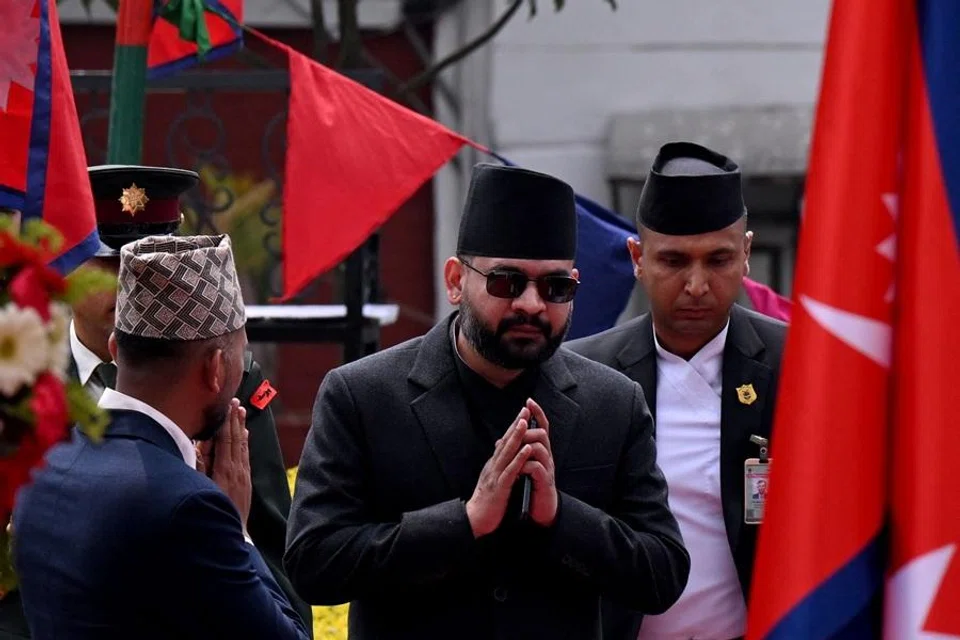
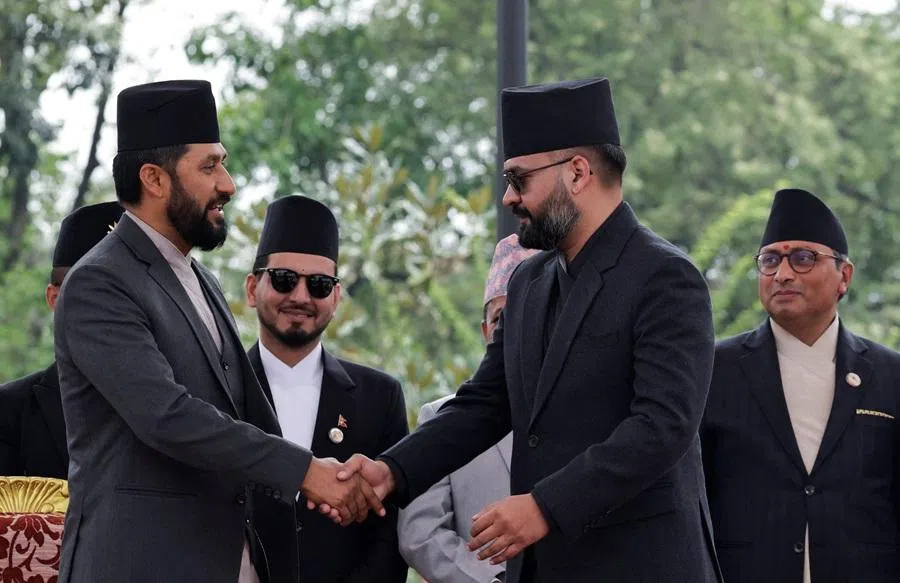
Nepal’s democracy is witnessing a second coming with yet another political transition. In the snap elections held on 5 March 2026, prompted by the Gen Z movement of September 2025, newcomer Rashtriya Swatantra Party (RSP) won the largest political mandate in the seven decades of modern Nepal’s political history. RSP’s senior leader, Balendra Shah, was sworn in as prime minister on 27 March.
An erstwhile kingdom and now a 17-year-old democracy, Nepal’s political space has been dominated by three traditional parties — the Nepali Congress, the Communist Party of Nepal-UML (CPN-UML) and the Maoist Centre (dissolved in November 2025, after a merger to form the Nepali Communist Party). None of these parties come close to the numbers that the RSP won under the leadership of its popular leader known as Balen.
A 35-year old rapper, structural engineer and former mayor of the capital city Kathmandu, Balen joined the RSP just two months before the elections on 5 March, and to the surprise of many political pundits and observers, the RSP won 182 out of 275 seats in the lower house of the parliament — the House of Representatives — just two seats short of a two-thirds majority. Balen is the youngest elected prime minister of Nepal.
For someone whose career in politics began as an independent mayoral candidate in 2022, who secured an astounding victory against established parties and leaders in mayoral race, and defeating a four-term Prime Minister KP Sharma Oli with a margin of 50,000 votes at the former’s local constituency — Jhapa-5 — in the parliamentary race, Balen’s victory has come with a huge mandate: addressing the Gen Z youths’ grievances raised during the popular movement in September 2025.
But the key question remains: what did Balen and the RSP do that struck a chord across age groups, not just Gen Z youths, culminating in a historical mandate?
Success of RSP and Balen Shah
In the past five years, Gen Z movements have been a dominant force of political transitions across the South Asian region, but not all have had outcomes like Nepal’s.
In 2022, Sri Lanka was the first country where a youth-led movement toppled the elected Rajapaksa regime, which had been in power for almost two decades. The angst against the Rajapaksas was primarily due to their handling of the country’s economy, and despite their nationalistic outlook, the youth-led Aragayala (struggle in Singhalese) showed them the door out of power. The fresh elections eventually brought a new communist regime to power.
Bangladesh also saw a strong uprising against Prime Minister Sheikh Hasina and her Awami League Party in 2024, after she had just come to power for a third consecutive term earlier that year. What was common between Bangladesh and Sri Lanka was that the youth were unhappy with family rule and domination, as well as with their disregard for the opposition.
While it was a youth-led movement in Nepal, youth leadership was warranted, and Balen Shah proved to be one who, during his rapper days, had voiced out against the menace of corruption and political misdeeds by parties in his songs.
Meanwhile, Nepal was a fairly young democracy with just 17 years of experience. The country’s democracy was the outcome of a decade-long anti-monarchy movement between 1996 and 2006, whereas Sri Lanka and Bangladesh have largely been democracies since their independence in 1948 and the 1970s respectively. The political transition in Nepal was essentially about change, with people playing a central role rather than the monarchy deciding the country’s future. But against the ideal imagination, it was the handful of parties that had sailed through the monarchical era and dominated the political space.
In the process, Nepal became more about a power struggle than national development, and hence, despite regular elections — in 2008, 2013, 2017 and 2022 — no coalition, party or leader could complete a five-year term, keeping Nepal hostage to their political ambitions.
And then there was the Gen Z movement. A protest against the government’s directive banning 26 social media apps became a trigger for the youth to raise their voices about underlying issues such as nepotism, corruption, unemployment, political instability, and an ageing leadership. While Prime Minister KP Sharma Oli of the CPN-UML faced public ire and resigned, the popular angst also reflected disenchantment with two other key parties — the Nepali Congress and the Maoist Centre — and their respective leaders, Sher Bahadur Deuba and Pushpa Kamal Dahal (also known as Prachanda).
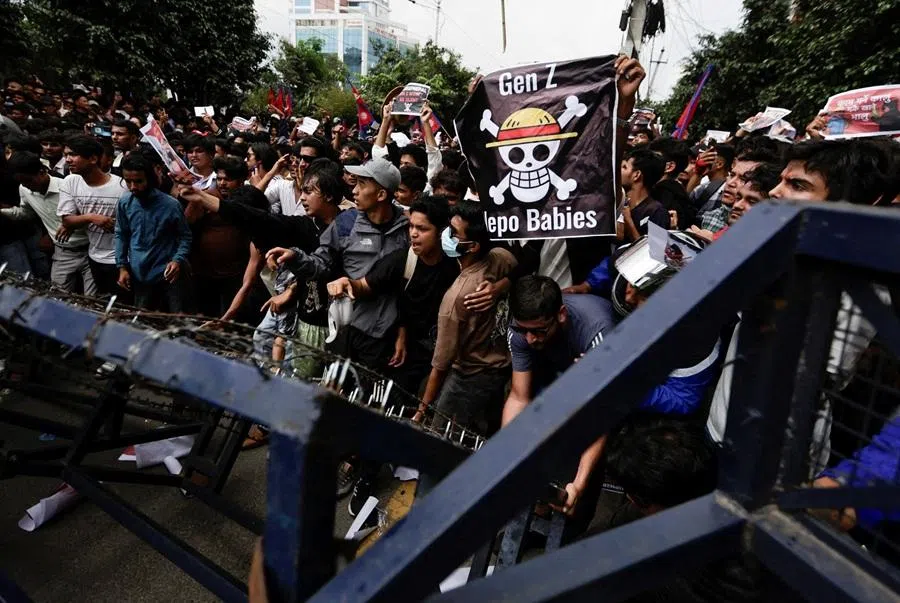
While it was a youth-led movement in Nepal, youth leadership was warranted, and Balen Shah proved to be one who, during his rapper days, had voiced out against the menace of corruption and political misdeeds by parties in his songs. He has also proved to be a reliable leader during his three-year term as mayor of Kathmandu.
Therefore, the youth of Nepal had an anthem and a leader in Balen, and later, by joining the RSP, he provided the party with a base among the voters. The RSP, as a merit-based youth-led party, and Balen, as a next-gen leader, proved to be a successful duo for the elections.
However, toppling a government through a movement and winning an election with a youth-centric agenda are two different things, and hence, doubts were paramount about whether the Balen-led RSP would be liked by all.
Many expected that the traditional parties would still be required to form a government, given that the RSP may not win a majority of its own, as has happened in the past with other parties. Meanwhile, as the ground reality shows, while youth nodded to a “Balen Wave”, they could also convince their families to vote for change. Since the country had never seen a stable government, others also voted for Balen, giving the RSP its first-ever biggest electoral mandate in the country’s political history.
The challenges ahead: from domestic to foreign policy
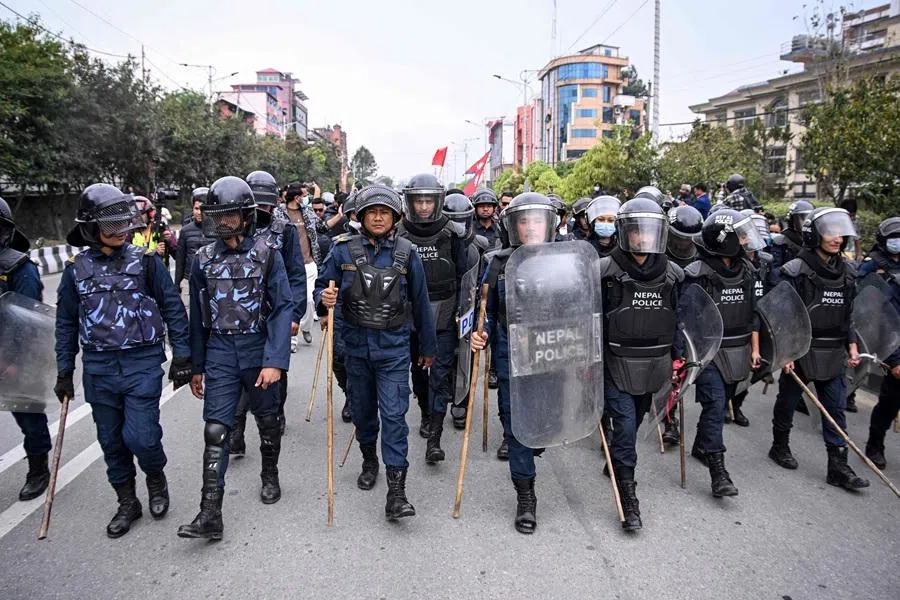
With a major mandate at hand, the new prime minister of Nepal, Balen, will have the foremost challenges at home. To begin with, providing justice to those who lost their lives during the Gen Z movement, allegedly at the hands of state police machinery. The interim government of Sushila Karki submitted an investigation report, and KP Sharma Oli has since been arrested over his alleged involvement in the deadly crackdown on the protests.
For a landlocked country with fewer industries, creating jobs at home would be a challenge, and it remains to be seen whether Balen can bring about that change.
The second challenge would be to bring transparency to politics, governance and finances to end the recurrence of the menace of nepotism and corruption. Creating employment at home would be their third priority. As of 2022, a strong 2.1 million Nepali people had moved to 15 countries, mainly to Gulf countries, over the span of three decades.
While their remittances constitute 25% of Nepal’s GDP (2024), the state often struggles to safeguard them during crises, and the ongoing war in the Middle East has reignited the debate. For a landlocked country with fewer industries, creating jobs at home would be a challenge, and it remains to be seen whether Balen can bring about that change.
Additionally, Balen will have a moral responsibility to ensure political stability, given that he and the RSP have a mandate for hope and aspirations. Therefore, ensuring the party’s internal stability would be key to ensuring stable leadership and government over the next five years.
Besides the domestic tasks at hand, foreign policy would be crucial.
While security dominates China’s Nepal policy, India too sees it through the strategic prism, be it tensions with China or Nepal being used by non-state actors to create problems in India, including terrorism.
Balancing between India and China
With its strategic location between India on three sides and China to the north, Nepal’s foreign policy has largely been defined by its geography. Historically, on the socioeconomic, political and people-to-people fronts, the country’s security and trade have been India-centric. While such close contact with China is limited by the Himalayan terrain, Beijing sees Nepal as crucial to the stability of Tibet, as it has been a gateway for external powers to ignite freedom movements in Tibet, such as the 1960s Khampa Rebellion.
While security dominates China’s Nepal policy, India too sees it through the strategic prism, be it tensions with China or Nepal being used by non-state actors to create problems in India, including terrorism.
Although India has maintained a stable presence in Nepal through goodwill, anti-India voices have emerged following the 2015 border blockade and the 2020 territorial dispute. Social media campaigns have prominently featured popular hashtags such as #BackOffIndia and #GoBackIndia, with youths leading the trend.
The generational gap has begun to shape Nepal’s India policy, with popular demand to balance Kathmandu’s ties with China through ambitious projects such as the Belt and Road Initiative (BRI). Now with a youth leader in office, would it change? Again, time will test it.
However, youth could be at the forefront in Beijing, as it has been able to project itself as a non-interventionist neighbour and one without a historical baggage of disputes. Although Tibetan and Tibetan exiles living in Nepal would be central to China’s Nepal policy, it would want to benefit from a new leadership that is open to implementing the BRI, despite it being signed a decade ago in 2017. Meanwhile, for China, while a new leadership opens a neutral ground in Nepal to start afresh and expect better outcomes, the influence of youth in the new government would also keep Beijing on high alert.
Nepal has seen a recurrence of the “Free Tibet” movement for several decades, though less under a democratic order. The last such movement in Nepal occurred in 2008, when Tibet was also facing an internal crisis, and the then Maoist Centre-led government, led by Prachanda, responded positively to Beijing’s concerns through police actions.
The new government does not bring the baggage of corruption, nepotism or poor governance, and will therefore have a clean slate to reform and introduce best practices in the country. At the same time, a lack of experience at the national level, before the leadership or the party, would require introducing a long-term, patient and delicately balanced approach on the domestic and foreign policy fronts.
The opinions expressed in this article are those of the author alone and do not reflect the views of the author’s current or past affiliations in any form.
![[Big read] From Egypt to Russia: Chinese men looking overseas for love](https://cassette.sphdigital.com.sg/image/thinkchina/7cc234fa5d6e700df16637531c40dda0d0ce633b8a8a8ea824d6766332f274ac)
![Hokkien roots, Brunei soil: My father’s journey across borders and spiritual planes [Eye on Fujian series]](https://cassette.sphdigital.com.sg/image/thinkchina/71f359b221f9d122e33e939974a2a8159629f5990340bdf70135adfea2d6a086)